1 pound
Eye of Horus Slot 1 pound — gameplay overview
Core concept and £1 stake experience
Playing Eye of Horus at a £1 stake moves gameplay into a higher engagement level where every spin has a stronger impact on balance and session pacing. While the core mechanics of the slot remain unchanged, the perception of risk and reward becomes more noticeable. Wins feel more meaningful, and losing streaks can affect the bankroll faster compared to lower stakes, which makes structured planning more important.
Gameplay flow at higher stake level
At £1 per spin, gameplay flow feels more dynamic and intense. Base game spins continue to provide smaller wins that help maintain session rhythm, but volatility swings become more visible because of the increased wager size. Players often notice that momentum shifts faster during both winning and losing sequences. Understanding how the underlying Mechanics function helps interpret these changes as part of normal statistical behaviour rather than predictable trends.
Reel structure and paylines overview
The slot keeps its classic five-reel structure with fixed paylines, offering a straightforward gameplay experience. This simplicity allows players to focus on symbol behaviour and bonus potential without needing to manage complex features. The layout supports fast gameplay, which becomes more noticeable at higher stakes where each spin carries more value.
Expanding symbols mechanics
Expanding symbols remain the central feature of Eye of Horus. During certain sequences, a selected symbol expands vertically across the reel, increasing the chance of full-payline combinations. At a £1 stake, successful expansions can create stronger payout moments because winnings scale with the bet size. Understanding how expanding symbols behave can help players recognise when feature rounds may significantly change session balance.
Session pacing at £1
Because bankroll movement accelerates at this level, session pacing becomes an important factor. Many players prefer defining clear limits before starting and maintaining consistent bet sizes rather than adjusting stakes frequently. The £1 level often feels like a transition into higher-risk gameplay, where discipline and planning become key elements for maintaining stability. For structured approaches to session control and risk awareness, refer to For players.
| Element | Details |
|---|---|
| Stake level | £1 (1 pound) |
| Engagement level | High |
| Gameplay flow | Faster balance movement |
| Reels | 5 reels |
| Paylines | Fixed structure |
| Main feature | Expanding symbols |
Demo mode testing before real play
Testing volatility safely
Using demo mode before playing Eye of Horus at a £1 stake allows players to experience the slot’s volatility without financial risk. Because this is a higher engagement level, balance fluctuations can feel more intense, and demo sessions provide a safe way to understand how quickly sessions can change. Players can observe win frequency, losing streaks, and overall gameplay rhythm without pressure from real-money outcomes.
Understanding feature triggers
Demo gameplay is ideal for learning how bonus features activate and how expanding symbols behave during both base spins and free spin rounds. By testing at the £1 level, players can simulate realistic gameplay conditions while building familiarity with scatter triggers, bonus timing, and feature patterns. Practising in Demo mode helps reduce uncertainty before transitioning to real play.
Analysing hit frequency patterns
Hit frequency refers to how often the slot produces winning combinations. Demo sessions allow players to observe patterns in base-game wins versus bonus-driven payouts. Understanding how frequently smaller wins appear compared to larger feature-based payouts helps players set realistic expectations and develop a more balanced approach. Reviewing the game’s Mechanics provides additional insight into how RTP and volatility influence these patterns.
Demo vs real gameplay comparison
Although demo mode uses the same mathematical model as real gameplay, emotional reactions differ significantly when real money is involved. At a £1 stake, the psychological impact of wins and losses becomes stronger, which can affect decision-making. Practising in demo mode helps players build confidence, test strategies, and develop discipline before entering real-money sessions.
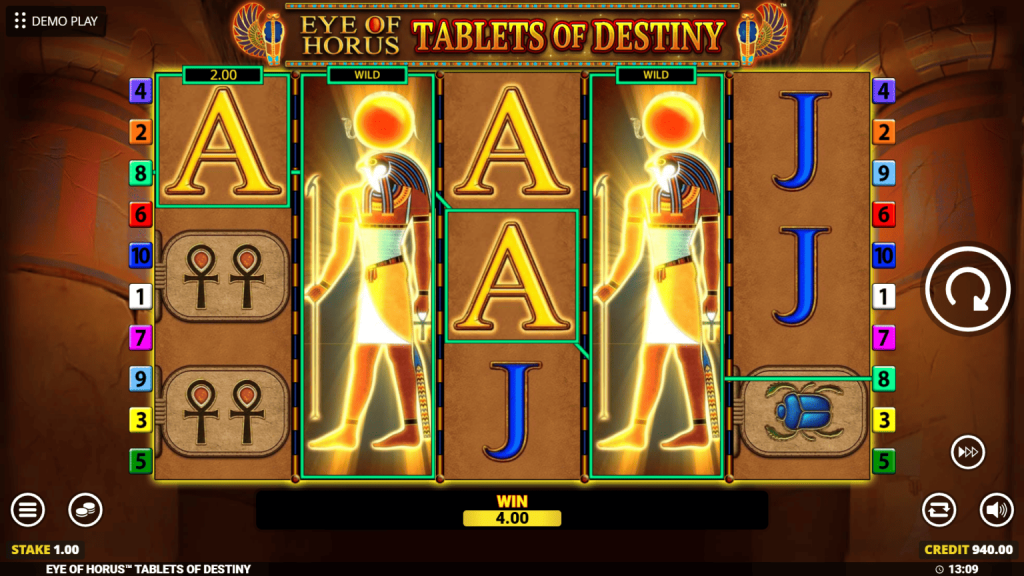
Two Wilds land on the reels and connect the A symbols 🔥
Clean line hit boosted by Wild substitutions ✨
WIN £4.00 💰
Solid return at £1 stake — steady momentum building 🚀
Deposits and bankroll setup for £1 gameplay
Recommended bankroll size
Playing Eye of Horus at a £1 stake requires stronger bankroll preparation compared to lower bet levels because each spin has a noticeable impact on balance. Many players prefer planning their bankroll based on the number of spins rather than focusing only on total funds. A common approach is preparing enough balance for approximately 150–250 spins, which allows time to experience both base gameplay and bonus rounds without immediate pressure. A structured bankroll helps players stay calm during volatility swings and reduces the risk of impulsive decisions.
Session budget planning
At higher stake levels like £1, defining a clear session budget becomes essential. Players often divide their overall bankroll into smaller segments to maintain control and prevent rapid losses during intense gameplay periods. Setting a stop-loss limit alongside a profit target creates a structured framework that supports disciplined decision-making. Instead of reacting emotionally to wins or losses, players can follow predefined rules and maintain a consistent strategy. More structured gameplay approaches can be explored in For players.
Deposit strategies for stability
A stable deposit strategy focuses on sustainability rather than chasing large wins. Splitting deposits into smaller amounts over time allows players to monitor spending more effectively and maintain better financial control. Some players also use deposit limits or reminders to help manage their entertainment budget responsibly. Treating deposits as part of planned entertainment expenses helps maintain realistic expectations and reduces stress during natural downswings. Additional guidance on managing funds can be found in Deposits.
Avoiding aggressive bet increases
One of the most common mistakes at a £1 stake is increasing bets impulsively after a win or during a losing streak. Raising the stake too quickly can accelerate balance loss and disrupt session rhythm. Maintaining a consistent bet size allows players to better understand the slot’s volatility and gameplay flow. If players choose to adjust stakes, doing so only after reaching predefined profit or loss thresholds helps maintain control and reduces emotional decision-making.
£1 Stake — Mini Bankroll Planner
Aim for 150–250 spins coverage.
That’s roughly £150–£250.
Split into 2–3 sessions.
Example: £50–£80 per session.
Stop-loss: pre-set amount.
Take-profit: lock wins early.
Mechanics and RTP behaviour at £1
RTP expectations at higher stake
When playing Eye of Horus at a £1 stake, the RTP (Return to Player) percentage remains the same as at any other bet level. The mathematical structure of the slot does not change depending on the stake size. However, the perception of RTP can feel different because balance movements become more visible and impactful. Wins appear more significant, and losing streaks may feel stronger due to the higher value of each spin.
It is important to remember that RTP reflects long-term averages over a very large number of spins. Short sessions at £1 may not reflect the theoretical return, especially given the slot’s volatility. Reviewing the underlying Mechanics helps players understand how probability and payout distribution function over time.
Volatility perception changes
At a £1 stake, volatility becomes more noticeable compared to lower betting levels. Eye of Horus is generally considered a medium-to-high volatility slot, meaning that sessions can include periods of fewer wins followed by stronger payout moments. Because each spin carries higher value, these swings can feel more dramatic.
Players moving up from 50p or 80p often notice that both positive and negative streaks feel intensified. Recognising that volatility is part of the slot’s design helps maintain discipline and prevents emotional reactions that may lead to impulsive betting decisions.
Expanding symbol behaviour
The expanding symbol mechanic remains the defining feature of the slot at all stake levels. When triggered, a selected symbol expands vertically across the reel, increasing the probability of full-payline wins. At a £1 stake, successful expansions can create more impactful payout spikes because winnings scale directly with the bet amount.
Understanding how expanding symbols interact with paylines helps players better interpret feature outcomes. Detailed explanations of these mechanics can be explored in the Feature sections dedicated to bonus behaviour.
Base game vs bonus rhythm
The base game provides steady pacing through smaller wins and near-miss combinations, maintaining session flow while players wait for bonus triggers. At £1, the contrast between base game returns and bonus round payouts becomes more noticeable. Bonus features can significantly change session balance when expanding symbols align across multiple reels.
Maintaining consistent stake discipline allows players to observe the natural rhythm between base gameplay and feature rounds. This structured approach helps manage volatility and maintain a balanced experience throughout higher-engagement sessions.
£1 — Mechanics Feel (Donut)
Feature rounds and bonus gameplay
Free spins performance at £1
Playing Eye of Horus at a £1 stake significantly increases the perceived intensity of free spin rounds. While the underlying mechanics remain unchanged, each spin carries more value, which makes both wins and losses feel more impactful. Free spins often introduce strong momentum shifts, and even moderate combinations may create noticeable balance changes at this level.
Expanding symbol payout impact
The expanding symbol mechanic plays a central role in bonus gameplay. When a selected symbol expands across the reel, it increases the chance of forming multiple paylines simultaneously. At a £1 stake, successful expansions can create stronger payout spikes because the win values scale with the bet size. Understanding how expanding symbols interact with paylines helps players anticipate moments when bonus rounds can significantly affect session results. More detailed explanations can be found in Feature sections.
Win potential and balance swings
Eye of Horus operates with medium-to-high volatility, meaning bonus rounds can produce a wide range of outcomes. Some free spins may deliver modest returns that extend gameplay, while others may result in strong wins that rapidly increase balance. At a £1 stake, these swings become more noticeable, which can intensify the overall gameplay experience. Players should expect variability rather than consistent outcomes from every feature round.
Bonus round discipline
Maintaining discipline during bonus gameplay is essential at higher stake levels. Players benefit from keeping the same bet size rather than increasing stakes immediately after triggering a feature. Emotional reactions during strong wins or disappointing bonuses can lead to impulsive decisions, so following a pre-planned strategy helps maintain control. Reviewing gameplay behaviour within Mechanics can support better understanding of volatility and encourage a more balanced approach to bonus sessions.
| Feature | Description |
|---|---|
| Free spins at £1 | Stronger impact, faster balance changes |
| Expanding symbols | Full-reel expansion increases payout potential |
| Win potential | Medium-high volatility, big swings possible |
| Balance movement | Faster compared to lower stakes |
| Bonus discipline | Keep same bet, avoid chasing |
Strategy tips for players using £1 bets
Advanced bankroll management
Playing Eye of Horus at a £1 stake requires a more structured bankroll strategy because each spin has a stronger impact on overall balance. Players often benefit from dividing their bankroll into smaller session allocations instead of using the entire balance at once. Planning sessions based on a set number of spins rather than purely monetary value can help maintain discipline and reduce emotional reactions during volatility swings. Structured guidance in For players can help establish consistent risk control.
Session timing strategies
At higher stake levels, shorter and more focused sessions can improve decision-making. Many players prefer playing in defined time blocks, such as 20–40 minutes, followed by breaks. This approach helps maintain concentration and prevents fatigue, which can lead to impulsive decisions. Setting both time limits and financial limits before starting creates a balanced structure for gameplay.
When to increase or reduce stake
Stake adjustments should always be planned rather than reactive. Increasing the bet after a winning streak may amplify volatility, while raising stakes during a losing phase can accelerate bankroll loss. A disciplined approach involves increasing stakes only after reaching a predefined profit buffer and reducing them when approaching a stop-loss level. Practising these adjustments first in Demo mode helps players understand the effects without financial risk.
Emotional control during volatility
Higher stakes naturally increase emotional involvement. Winning streaks may encourage overconfidence, while losing streaks can trigger frustration or chasing behaviour. Recognising that each spin operates independently through RNG mechanics helps maintain rational decision-making. Sticking to a pre-defined plan, avoiding sudden changes, and taking breaks when needed allows players to manage volatility more effectively and maintain long-term session stability.
Popular Symbols — Eye of Horus 🎰
Sequels comparison with lower stake examples
Differences vs 10 pence gameplay
At 10 pence per spin, gameplay feels slower and more relaxed. Sessions usually last longer because bankroll movement is gradual, allowing players to focus on observing mechanics rather than managing risk. Compared to £1 gameplay, wins feel smaller and volatility is less emotionally noticeable.
Comparison with 20 pence pacing
The 20p level introduces slightly faster session pacing while still remaining relatively controlled. Balance fluctuations are more visible than at 10p but still manageable for longer sessions. Compared to £1 stakes, gameplay remains calmer and less intense.
Contrast with 50p and 80p risk level
At 50p and 80p, gameplay starts to feel more dynamic, with stronger balance swings and more noticeable volatility. The £1 level increases this effect further, creating faster bankroll movement and more impactful wins and losses.
Why £1 feels high engagement gameplay
The £1 stake creates a higher engagement experience because each spin carries significant value. Bonus rounds and expanding symbols feel more impactful, and session pacing becomes faster. Players often treat this level as a transition into higher-risk gameplay, where discipline and planning become essential.