20 pence
Eye of Horus Slot — 20 pence
Demo gameplay and testing at 20p
Andrew Rhodes is known for analysing betting behaviour and stake efficiency across different slot levels. His research often focuses on how medium-low stakes such as 20 pence influence volatility perception, session duration, and bonus frequency. According to his analytical approach, demo testing at specific stake levels provides clearer insight into slot mechanics without financial pressure.
Playing Eye of Horus in demo mode at 20 pence allows players to simulate realistic mid-range gameplay conditions. Compared to 10p, a 20p stake slightly increases balance fluctuation while still keeping risk controlled. This makes it ideal for studying reel rhythm, win distribution, and feature timing over extended sessions.
Demo play helps players understand how often bonus triggers appear and how expanding symbols perform during free spins. Observing multiple feature cycles without real-money exposure allows for better volatility evaluation. Players can track how base game wins support balance stability and how bonus rounds influence overall payout flow.
Testing the Demo version on both mobile and desktop platforms is also important. Mobile gameplay offers quick access and shorter sessions, while desktop play provides clearer visibility of paylines and symbol behaviour. Comparing both environments during demo sessions helps players identify which format feels more comfortable before switching to real money play.
At the 20 pence level, demo analysis becomes a practical tool for building expectations. It allows players to evaluate session sustainability, recognise dry streaks, and understand how the expanding symbol mechanic impacts potential returns.
🎰 Eye of Horus Slot — 20 pence
Demo gameplay and testing at 20p
- demo play for testing 20 pence stake gameplay
- understanding reel rhythm and session flow
- testing feature triggers without financial risk
- mobile vs desktop demo experience comparison
Playing in demo mode at 20p allows players to simulate realistic gameplay while focusing on mechanics analysis. It helps evaluate expanding symbols, bonus timing, and balance stability over longer sessions.
Eye of Horus Slot — 20 pence
Deposit options and bankroll planning
Playing Eye of Horus with a 20 pence stake requires a balanced approach to deposits and bankroll management. Medium-low stakes allow players to extend sessions while still experiencing realistic gameplay fluctuations. Choosing the right deposit size helps maintain stability and prevents quick balance depletion, especially during periods of higher volatility.
Minimum deposits for 20p gameplay
Smaller deposits are often preferred when testing or playing at 20p stakes. They allow players to explore gameplay over longer periods without committing large amounts of money. A controlled starting balance makes it easier to analyse session performance and understand how often bonus features appear during normal play.
UK payment methods
Players in the UK commonly use debit cards, e-wallets, and instant banking solutions because they provide quick processing and easy transaction tracking. Selecting a reliable payment method helps maintain consistent bankroll control and simplifies monitoring deposits and withdrawals.
Budget control at medium stake level
Managing a bankroll at 20p bets involves setting clear limits before starting a session. Many players divide their balance into smaller portions to avoid overspending. This structured method reduces emotional decision-making and helps maintain focus on gameplay strategy rather than short-term results.
Balance between deposit size and session duration
A well-planned deposit ensures that gameplay sessions last long enough to observe mechanics, feature frequency, and payout patterns. Longer sessions with controlled stakes provide better insight into volatility and help players develop a consistent playing rhythm.
💳 Eye of Horus Slot — 20p Deposit & Bankroll Planning
| Category | Details |
|---|---|
| Minimum Deposits | Small starting balance supports controlled 20p sessions and longer playtime |
| UK Payment Methods | Debit cards, e-wallets, instant banking for fast and secure transactions |
| Budget Control | Set session limits and divide bankroll into smaller segments |
| Session Balance | Match deposit size with expected session duration and volatility |
Eye of Horus Slot — 20 pence
Core mechanics and paylines structure
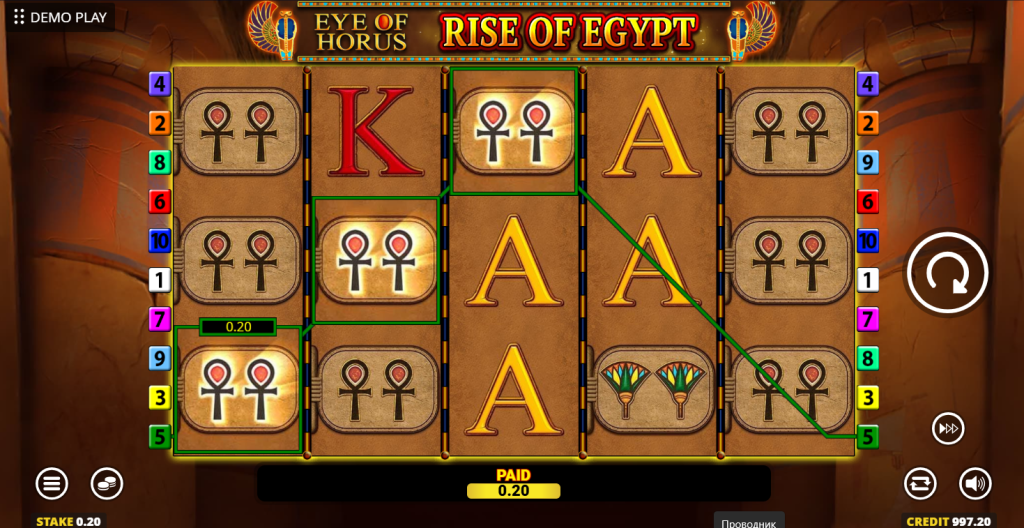
While playing Eye of Horus at a 20 pence stake, we focused on analysing how the core mechanics influence gameplay rhythm and overall session balance. The slot follows a classic reel structure that makes it easy to understand symbol alignment and observe how paylines activate during normal spins. This traditional layout allows players to clearly track wins and evaluate how often combinations appear over longer sessions.
Classic reels
The game uses a standard reel setup designed to provide familiar gameplay flow. During our 20p sessions, the reels created a steady pace where smaller wins appeared regularly while waiting for feature triggers. The classic structure helps players quickly understand how results are generated and makes it easier to follow gameplay patterns.
Paylines system
The paylines system determines how symbols connect to form winning combinations. At a 20 pence stake, observing paylines becomes important because multiple line hits can balance the session and extend gameplay time. Understanding how paylines work helps players recognise which symbol placements lead to consistent payouts.
Expanding symbol mechanic
One of the main mechanics observed during gameplay is the expanding symbol feature. When activated in free spins, the chosen symbol expands vertically across the reel, increasing the potential for multiple line wins. Playing at 20p allowed us to analyse how this mechanic changes win potential compared to the base game.
Basic payout mathematics
The payout structure is based on symbol hierarchy and line combinations. Lower-value symbols appear more frequently and help maintain balance stability, while premium symbols and bonus features provide larger payout potential. Analysing the mathematics behind payouts during 20p sessions helps players understand volatility and expected gameplay behaviour.
Eye of Horus Slot — 20 pence
Feature system and bonus analysis
While playing Eye of Horus at a 20 pence stake, the feature system becomes the main focus of analysis. The bonus mechanics are designed to shift the rhythm of the game from steady base spins to higher-intensity moments. Understanding how often features trigger and how they influence payout potential is essential for evaluating overall performance.
Free spins with expanding symbol
The core feature of the slot is the free spins round with a randomly selected expanding symbol. When this symbol appears during the bonus, it expands vertically to cover the entire reel, increasing the probability of multiple line wins. At a 20p stake, this mechanic can significantly amplify returns compared to regular base game spins.
Bonus trigger frequency
Bonus rounds are activated when the required scatter symbols land on the reels. During extended 20p sessions, analysing trigger frequency helps determine whether the slot leans toward longer dry periods or relatively steady feature appearances. Observing multiple sessions gives a clearer picture of volatility behaviour.
Multiplier potential
Although the game does not rely heavily on constant multipliers in the base game, bonus rounds can create strong payout potential through expanding symbol combinations. When multiple reels expand simultaneously, total win values can increase noticeably, especially at mid-level stakes like 20p.
Base game vs bonus mode difference
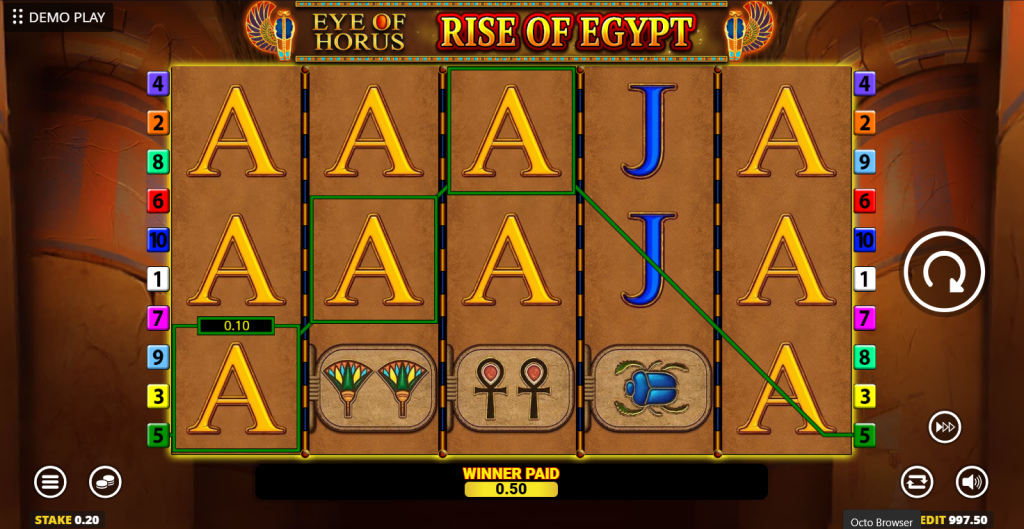
The base game delivers consistent spinning with smaller, more regular wins based on paylines. In contrast, bonus mode introduces higher anticipation and stronger payout opportunities due to expanding symbols. This contrast between steady base gameplay and feature-driven intensity defines the slot’s volatility profile.
Eye of Horus Slot — 20 pence
Strategy and tips for 20p players
Playing Eye of Horus at a 20 pence stake sits between low-risk testing and more active mid-level gameplay. This level allows players to experience noticeable balance movement while still maintaining reasonable control over risk. A structured strategy becomes more important compared to 10p sessions, as fluctuations can occur faster.
Low risk vs medium stake approach
At 20p, players are no longer at the minimum stake, so volatility feels slightly stronger. A disciplined approach helps maintain stability. Some players treat 20p as a controlled medium stake, using consistent spins to observe feature timing without aggressively increasing bets. The key is maintaining a clear plan rather than reacting to short-term outcomes.
Bankroll management
Effective bankroll management is essential at this level. Players often divide their total balance into session portions and set clear stop-loss and target limits. Tracking session duration and total spins helps prevent emotional decisions. Managing balance carefully ensures that bonus rounds can be reached without rapid depletion.
Optimal session duration
Mid-level stakes like 20p benefit from structured session timing. Short sessions may not provide enough data to evaluate feature frequency, while overly long sessions can increase exposure to volatility. A balanced session length allows players to analyse gameplay rhythm and bonus behaviour while staying within budget limits.
When to adjust bet size
Bet adjustments should follow a planned strategy. Increasing the stake may be considered after stable performance and clear understanding of volatility. Reducing the bet can help preserve balance during extended losing periods. The most important factor is consistency — decisions should be based on logic rather than impulse.
| Strategy Element | Key Tips for 20p Players |
|---|---|
| Low risk vs medium stake | Treat 20p as controlled mid-level gameplay, avoid impulsive increases |
| Bankroll management | Divide balance into sessions, set limits before playing |
| Session duration | Medium-length sessions help analyse feature frequency |
| Bet size adjustments | Increase only after stable gameplay, reduce during losing streaks |
| Gameplay focus | Observe volatility, reel rhythm, and bonus timing |
Eye of Horus Slot — 20 pence
RTP, volatility and performance expectations
When playing Eye of Horus at a 20 pence stake, understanding RTP and volatility helps set realistic expectations for gameplay performance. RTP (Return to Player) represents the theoretical percentage of wagered money that may be returned over a long period of play. While RTP does not guarantee short-term results, it provides a general reference point for evaluating long-term balance behaviour.
RTP value
The RTP value indicates the mathematical return built into the game’s design. At a 20p stake, RTP remains consistent regardless of bet size, meaning the overall statistical expectation stays the same whether players use lower or slightly higher stakes. However, session results can still vary significantly due to volatility.
Medium to high volatility
Eye of Horus is typically considered a medium-to-high volatility slot. This means that players may experience longer periods of smaller wins or no wins, followed by stronger payouts during feature rounds. At 20p, these fluctuations can feel more noticeable compared to minimum stakes, making bankroll planning more important.
Win frequency at 20p
Win frequency reflects how often smaller payouts appear during gameplay. While base game wins may help maintain balance stability, most significant returns usually come from bonus rounds with expanding symbols. Observing multiple sessions helps players better understand how frequently winning combinations occur.
Performance expectations
Realistic expectations are essential for maintaining a structured approach. Players should expect variability between sessions, including dry streaks and occasional higher-value feature hits. Analysing gameplay over longer periods provides a clearer understanding of performance rather than focusing on short-term results.
🎰 RTP & Volatility Overview — 20p Gameplay
Eye of Horus Slot — 20 pence
Sequels and related versions comparison
The Eye of Horus series includes several versions that expand the original gameplay while keeping the Egyptian theme and expanding symbol mechanic. When playing at a 20 pence stake, comparing different versions helps players understand how volatility, feature intensity, and gameplay rhythm change between titles.
Eye of Horus Megaways
Eye of Horus Megaways introduces a dynamic reel system where the number of symbols on each reel changes with every spin. This creates thousands of potential win ways instead of fixed paylines. At a 20p stake, Megaways gameplay feels more unpredictable, with increased variability and stronger feature-driven moments compared to the classic version.
Eye of Horus Gambler
The Gambler version focuses on risk-based mechanics and interactive elements. Players may encounter gameplay decisions that influence potential rewards, making sessions feel more strategic. At mid-level stakes like 20p, this version can produce faster balance swings due to higher volatility and decision-driven gameplay.
Eye of Horus Power 4
Eye of Horus Power 4 enhances the traditional format by introducing additional feature layers or expanded reel interactions. The gameplay tends to feel more active, with increased chances to engage with bonus elements. Players who prefer more frequent action may find this version appealing during medium stake sessions.
Mechanics and gameplay style comparison
The classic Eye of Horus emphasises structured paylines and balanced pacing. Megaways increases randomness and win combinations, Gambler introduces risk-based interaction, and Power 4 focuses on enhanced feature activity. Comparing these mechanics allows players to select a version that aligns with their preferred volatility level and gameplay style.