5 GBP
Gameplay Overview at £5 Stake
Andrew Rhodes explains that a £5 stake in Eye of Horus clearly moves gameplay into the high-bet category within the UK market. At this level, sessions become more performance-focused and structured, as each spin carries noticeable financial weight. During demo testing, £5 per spin highlights volatility patterns more clearly, since balance fluctuations occur faster compared to medium-level stakes.
High-Bet Positioning in UK Market
In the UK slot environment, £5 is typically considered a confident high recreational stake rather than casual play. It sits above common levels such as £2 and £4, meaning players often approach sessions with predefined bankroll limits and stronger discipline. This level requires planning rather than spontaneous betting.
Reel Structure and 243 Ways to Win
The structural mechanics of Eye of Horus remain unchanged at £5. The game still operates on a 5-reel, 3-row layout with 243 ways to win. Probability, symbol frequency, and feature mechanics stay identical; only the payout scale increases. Any winning combination that pays at £2 or £4 will scale proportionally at £5.
Gameplay Pacing at £5 Level
At £5 per spin, gameplay pacing feels significantly more dynamic. Balance swings become more pronounced, especially during dry streaks or when bonus features activate. Expanding symbol sequences can create strong spikes, while base-game losses feel more immediate due to higher exposure per spin.
Comparison vs £2 and £4 Stakes
Compared to £2 and £4 levels, the £5 stake increases both risk and reward per spin. While the mathematical structure remains constant, emotional intensity rises as fluctuations accelerate. Andrew Rhodes recommends that players test the £5 level in demo mode first, as outlined in Demo · For players, before transitioning to real-money sessions.
Gameplay Overview — £5 Stake (Eye of Horus)
Compact responsive block for mobile + desktop: high-bet positioning, 243 ways structure, pacing, and stake comparison.
RTP & Volatility Behaviour at £5
Theoretical RTP Expectations
Eye of Horus keeps the same theoretical RTP at any stake level, including £5. RTP is part of the slot’s long-term math and typically sits in the mid-96% range depending on the casino configuration. Moving from £2 or £4 to £5 does not improve the expected return percentage; it only increases the monetary size of wins and losses. Short sessions can still look very different from the theoretical RTP because RTP is designed to average out over a large number of spins.
Volatility Perception at Higher Bets
At £5 per spin, the game’s medium–high volatility feels stronger because balance changes become faster and more noticeable. The probability model is unchanged, but the emotional intensity increases: dry streaks feel more expensive and bonus spikes feel more rewarding. This stake level tends to amplify how players perceive variance, especially if the bonus feature doesn’t trigger early in the session.
Hit Frequency vs Payout Scaling
Hit frequency does not increase at £5. The chance of landing a win remains the same as at lower stakes; the only difference is that payout values scale with the bet size. That means small base wins can look more meaningful, but they may still be outweighed by losing spins during volatility cycles. Feature-driven wins stand out more clearly at £5 because the stake magnifies each successful expansion or bonus connection.
Balance Swings and Risk Exposure
Risk exposure at £5 is higher simply because each spin carries more cost. Medium–high volatility slots can produce visible up-and-down waves, and at £5 those waves can move the balance quickly in either direction. This makes session planning, stop-loss limits, and disciplined stake control more important than at £2 or £4. For deeper technical context on how return and variance interact, see RTP und Volatility · Mechanics.
RTP vs House Edge (Eye of Horus) — £5 Stake View
Responsive donut chart for mobile and desktop. Edit RTP if your casino config differs.
Features, Symbols & Bonus Mechanics
Expanding Wild Feature Behaviour
The expanding wild feature is the core mechanic that defines Eye of Horus. During the free spins bonus, one symbol is selected and gains the ability to expand vertically across an entire reel when it appears. This dramatically increases the number of active 243-way combinations on a single spin. At higher stakes such as £5, the mechanic behaves exactly the same mathematically, but the financial impact of a full-reel expansion becomes much more noticeable due to the larger bet size.
Premium vs Low Symbol Interaction
Eye of Horus includes premium Egyptian-themed symbols alongside lower-value card symbols. Premium symbols provide stronger payouts but generally appear less frequently, while low symbols contribute to smaller, more consistent wins in the base game. The interaction between these categories becomes especially important during the bonus round. If a premium symbol is selected as the expanding feature, the payout potential increases significantly compared to when a low-value symbol is chosen.
Bonus Trigger Mechanics
The bonus round is typically triggered by landing scatter symbols on the reels. Once activated, a set number of free spins begins, and the expanding symbol feature is applied. The trigger frequency does not change with stake size, but at £5 each bonus round carries greater exposure and reward potential. The outcome of the feature depends on how often the selected symbol appears and expands during the free spins sequence.
Feature Impact on Win Potential
Most of the slot’s higher win potential is concentrated within the bonus feature rather than the base game. While regular spins provide steady but smaller payouts, the expanding reel mechanic inside free spins creates the opportunity for stacked wins across multiple reels. This is where the strongest payout spikes typically occur. Players seeking deeper structural insight into how these systems connect can review Feature · Symbol for a more detailed breakdown of symbol behaviour and bonus mechanics.
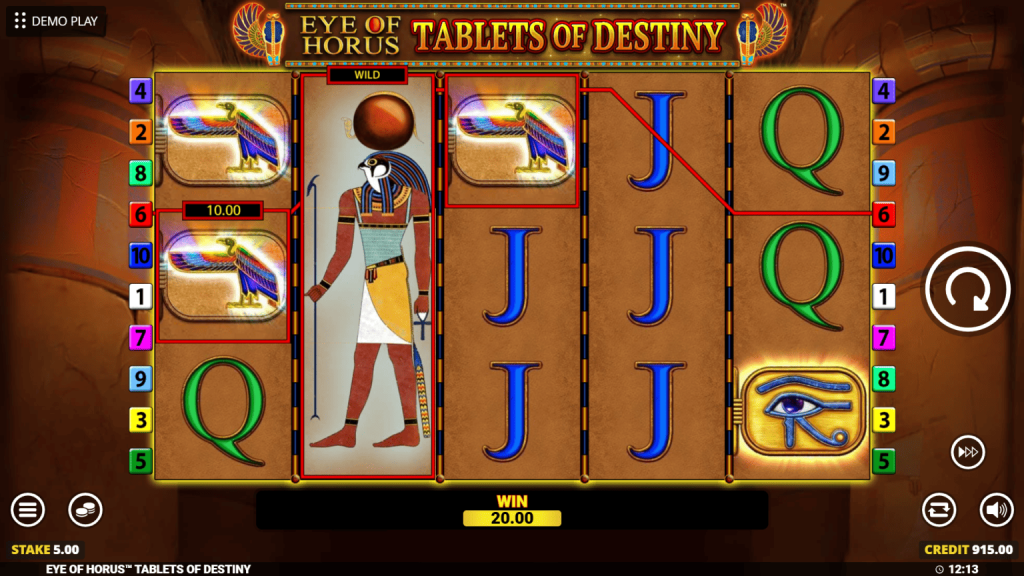
At a £5 stake, the combination formed a clean line hit and delivered a smooth £20.00 win — a nice mid-level payout boosted by the wild expansion 🎰✨.
Free Spins & Real Money Expectations
Free Spins Structure at £5 Stake
At a £5 stake, the free spins feature in Eye of Horus keeps the same structure as at lower levels, but the financial exposure per spin becomes significantly higher. The bonus is typically triggered by landing scatter symbols, after which one symbol is selected as the expanding icon. During free spins, whenever that symbol appears, it can expand to cover the entire reel, activating multiple winning ways simultaneously.
The mechanics do not change with the bet size, but at £5 each expanding reel has a stronger monetary effect. Even medium combinations can generate noticeable balance growth, while premium symbol expansions may create substantial spikes.
Bonus Round Payout Potential
Most of the slot’s stronger payouts occur during the bonus round rather than the base game. At £5, the payout scaling becomes more visible — a solid feature can quickly outperform several base spins. However, volatility still plays a key role. Some bonus rounds may deliver moderate returns, while others can generate significant momentum if expanding symbols connect across multiple reels.
The key factor remains which symbol is chosen for expansion. A premium symbol selection increases payout potential, while a lower-value symbol may create steadier but smaller returns.
Demo vs Real Gameplay Differences
Demo mode is useful for testing how £5 feels in terms of pacing and volatility without financial pressure. Players can observe bonus frequency, balance swings, and session rhythm before committing real money. The mathematical model remains identical in demo and real play.
However, real-money sessions introduce psychological intensity. Balance drops and wins feel more impactful at £5, which can influence decision-making. Emotional discipline becomes more important when real funds are involved.
Realistic Expectations for High Bets
High-bet sessions should be approached with structured planning and realistic expectations. Free spins are a volatility-driven opportunity, not a guaranteed profit feature. Extended dry periods are possible, and strong wins may arrive unpredictably.
Players transitioning from demo to real money should carefully manage deposits and session limits. For structured preparation and financial planning guidance, see Demo · Deposits, where stake transition and bankroll considerations are explained in more detail.
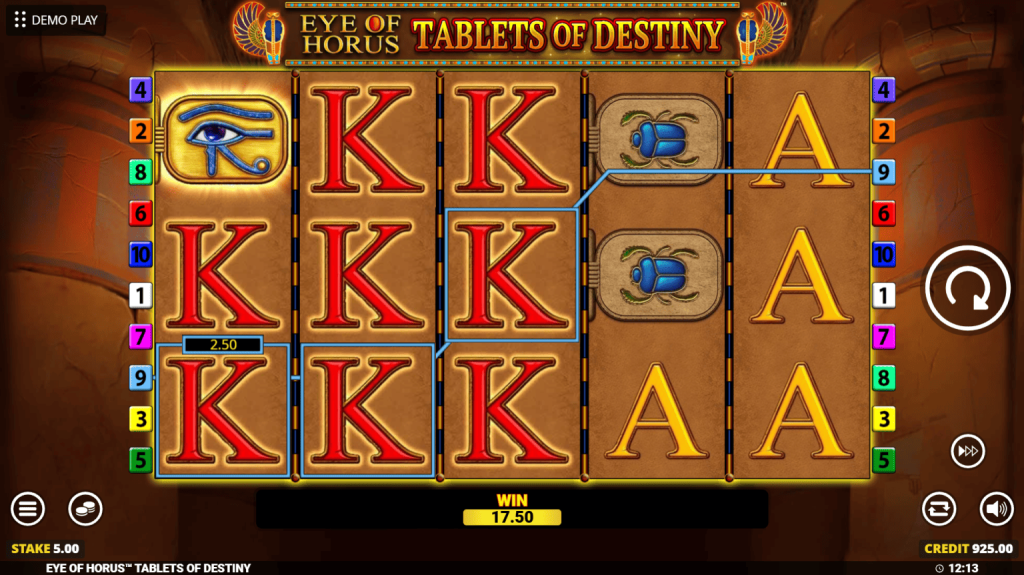
The clean alignment delivered a solid £17.50 win, showing how stacked premium letters can generate steady mid-level payouts even without triggering the bonus feature 🔥
Game Strategies & Player Control
Bankroll Management for £5 Players
Playing Eye of Horus at a £5 stake requires structured bankroll planning because each spin carries higher financial exposure. Players should define a clear session budget before starting and use stop-loss and take-profit limits to maintain control. Dividing the bankroll into smaller session segments helps extend playtime and reduces the risk of quick balance depletion during volatility swings.
Session Timing and Discipline
Short, focused sessions are often more effective at higher stakes. Taking breaks after noticeable balance changes allows players to reset mentally and avoid impulsive decisions. Maintaining consistent betting patterns instead of frequent stake changes helps preserve stability and improves overall session control.
Emotional Control During Volatility
Medium–high volatility can create rapid balance fluctuations, especially at £5 per spin. Emotional discipline is important during losing streaks, as increasing bets to chase losses often increases risk rather than improving outcomes. Staying committed to predefined limits helps maintain a responsible and controlled approach.
Practical Strategies for Higher Stakes
Higher-stake players benefit from observing feature frequency, understanding gameplay pacing, and testing strategies in demo mode before real-money sessions. Structured preparation and realistic expectations remain essential. For deeper guidance and structured planning methods, see For players · Game strategies.
Maximum Win Calculator (Eye of Horus)
More engaging block: pick a stake preset, set a max-win multiplier, and see the max payout instantly. Works on mobile and desktop.
Max payout at your stake
“Max win” is a theoretical ceiling (very rare). Use your official max-win multiplier for this game/version.
Sequels Comparison & Winning Concepts
Eye of Horus Sequels Overview
The Eye of Horus series includes several versions such as the original game, Megaways editions, and newer variants with modified reel structures or additional mechanics. While the core theme and expanding symbol feature remain consistent, each sequel introduces different volatility levels, win potential, or pacing. Some versions focus on faster gameplay with more dynamic reel movement, while others maintain the classic structured rhythm that long-time players prefer.
Realistic Winning Approaches
Winning strategies in Eye of Horus are less about prediction and more about session management. Players often focus on choosing an appropriate stake level, maintaining bankroll discipline, and understanding feature behaviour. Observing how frequently expanding symbols appear and managing session length can help create a more balanced experience, especially at medium or high bet levels.
Myths About Hacks or Cheat Systems
There are many claims online about “secret patterns,” hacks, or cheat methods that guarantee wins. In reality, licensed slot games operate using certified random number generators (RNG), meaning outcomes cannot be manipulated by external strategies or timing tricks. No system can override the game’s mathematics.
Randomness vs Player Control
While randomness determines results, players still control key factors such as stake size, session limits, and risk tolerance. Understanding volatility and maintaining realistic expectations allows players to stay disciplined and enjoy the game without relying on myths or unrealistic promises.