How to play Eye of Horus: rules & basics
Basic game rules
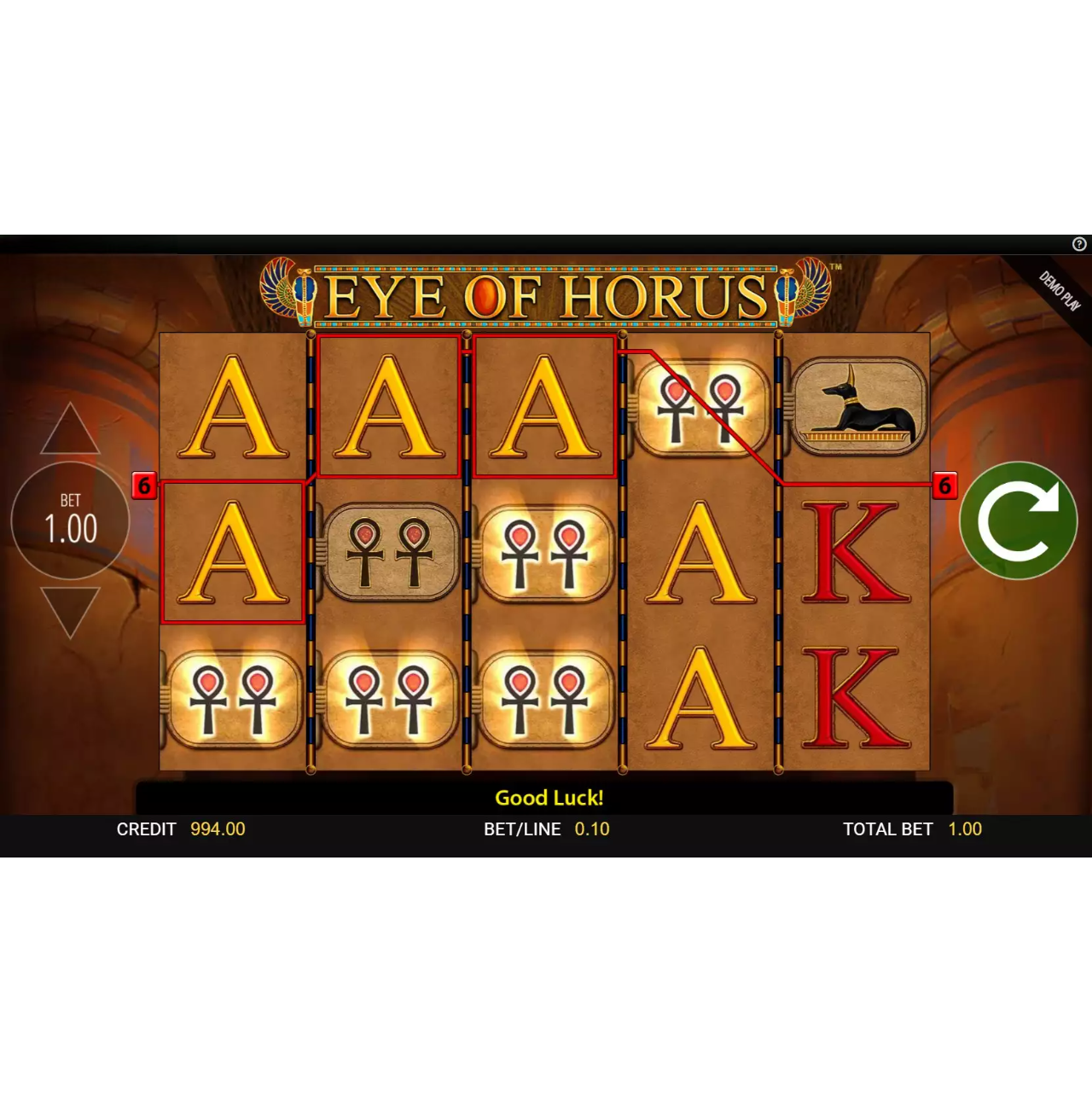
Eye of Horus is a classic 5-reel slot built around simple, transparent mechanics. The game uses fixed paylines, meaning wins are formed only on predefined lines from left to right. Each spin is completely independent and controlled by an RNG, so previous results never influence future outcomes. According to slot analyst Andrew Rhodes, this simplicity is exactly what makes the game accessible for both new and experienced players in the UK market.
Paylines, bets and minimum requirements
The slot features a fixed number of paylines that remain active at all times. Players adjust only the stake size, not the number of lines. The minimum bet is low enough to allow long sessions with controlled risk, while higher stakes increase potential payouts proportionally. All winning combinations must start from the first reel, which reinforces disciplined, left-to-right gameplay rather than random hits.
Trying the game in demo mode
Before playing with real money, it’s recommended to test Eye of Horus in Demo mode. This allows players to understand reel behaviour, payout logic, and symbol frequency without financial pressure. Demo play is especially useful for learning the rhythm of the slot and setting realistic expectations for long-term sessions.
How to play Eye of Horus: rules & basics
Basic game rules
Eye of Horus is a classic 5-reel slot with fixed paylines. Wins are formed on predefined lines from left to right, and each spin is independent (RNG-based), so previous results don’t affect future outcomes.
-
Fixed paylines: you adjust only your stake, not the number of active lines.
-
Left-to-right wins: combos must start on reel 1 to count.
-
Session rhythm: the slot is best approached with patience and consistent bet sizing.
RTP & Volatility explained
Official RTP of Eye of Horus
Eye of Horus has an officially published RTP of 96.36%, which places it slightly above the long-term average for classic video slots. RTP (Return to Player) represents the theoretical percentage of all wagered money that is returned to players over an extremely large number of spins. In practical terms, this means that for every 100 units wagered, around 96.36 units are statistically paid back to players over time.
It’s important to understand that RTP does not describe short sessions or individual outcomes. Eye of Horus can still deliver long dry spells or clusters of wins despite its stable RTP. The value reflects long-term balance, not guaranteed results. Players who approach the slot with realistic expectations tend to appreciate its mathematical transparency and consistent behaviour.
Medium volatility: what it means in real play
Eye of Horus is classified as a medium-volatility slot. This volatility level creates a balance between win frequency and payout size. Wins appear regularly enough to maintain engagement, but the slot does not flood sessions with constant small payouts, nor does it rely exclusively on rare, massive wins.
In practice, medium volatility means:
- You can expect periodic wins, not constant hits every few spins
- Payouts are usually moderate, with occasional stronger combinations
- Big wins are possible, but they are not frequent or explosive
This volatility profile suits players who prefer measured gameplay rather than high-risk chasing. The slot rewards patience and steady bet sizing instead of aggressive stake escalation. For many players, this creates a smoother session flow with fewer emotional swings.
How RTP and volatility work together
RTP and volatility should always be viewed together. A solid RTP combined with medium volatility means Eye of Horus distributes its returns gradually rather than in extreme spikes. The slot does not rely on one massive feature to compensate for long losing periods. Instead, payouts are spread across base game wins and free spin rounds.
Understanding the core Mechanics helps explain why the slot behaves this way. Its fixed paylines and classic symbol structure naturally support a balanced payout model, where consistency matters more than chasing rare jackpot-style outcomes.
What to expect from a typical session
During an average Eye of Horus session, players should expect:
- A stable pace with identifiable winning cycles
- Periods of balance fluctuation without extreme drops
- Free spins acting as enhancement, not guaranteed profit moments
The slot rarely delivers instant results. Instead, it builds value over time, which makes bankroll management especially important. Short sessions may feel underwhelming, while longer, controlled sessions tend to reflect the slot’s true statistical nature.
This behaviour aligns well with players who enjoy classic slot rhythm, predictable structure, and long-term balance rather than fast, volatile gameplay driven by constant bonus triggers.
Session Flow
Growth & Drops (example bankroll curve)
Example session curve: dips, recovery phases, and occasional stronger rises — typical for medium-volatility play.
Game mechanics & main features
Wild symbols and their role
In Eye of Horus, Wild symbols substitute for all regular paying symbols to help complete winning combinations on active paylines. They do not replace Scatter symbols, which keeps the structure of the game clean and predictable. Wilds appear only in the base game and are designed to support steady payouts rather than sudden spikes. This reinforces the slot’s balanced nature and rewards players who maintain consistent stakes over time.
Scatter symbols and Free Spins logic
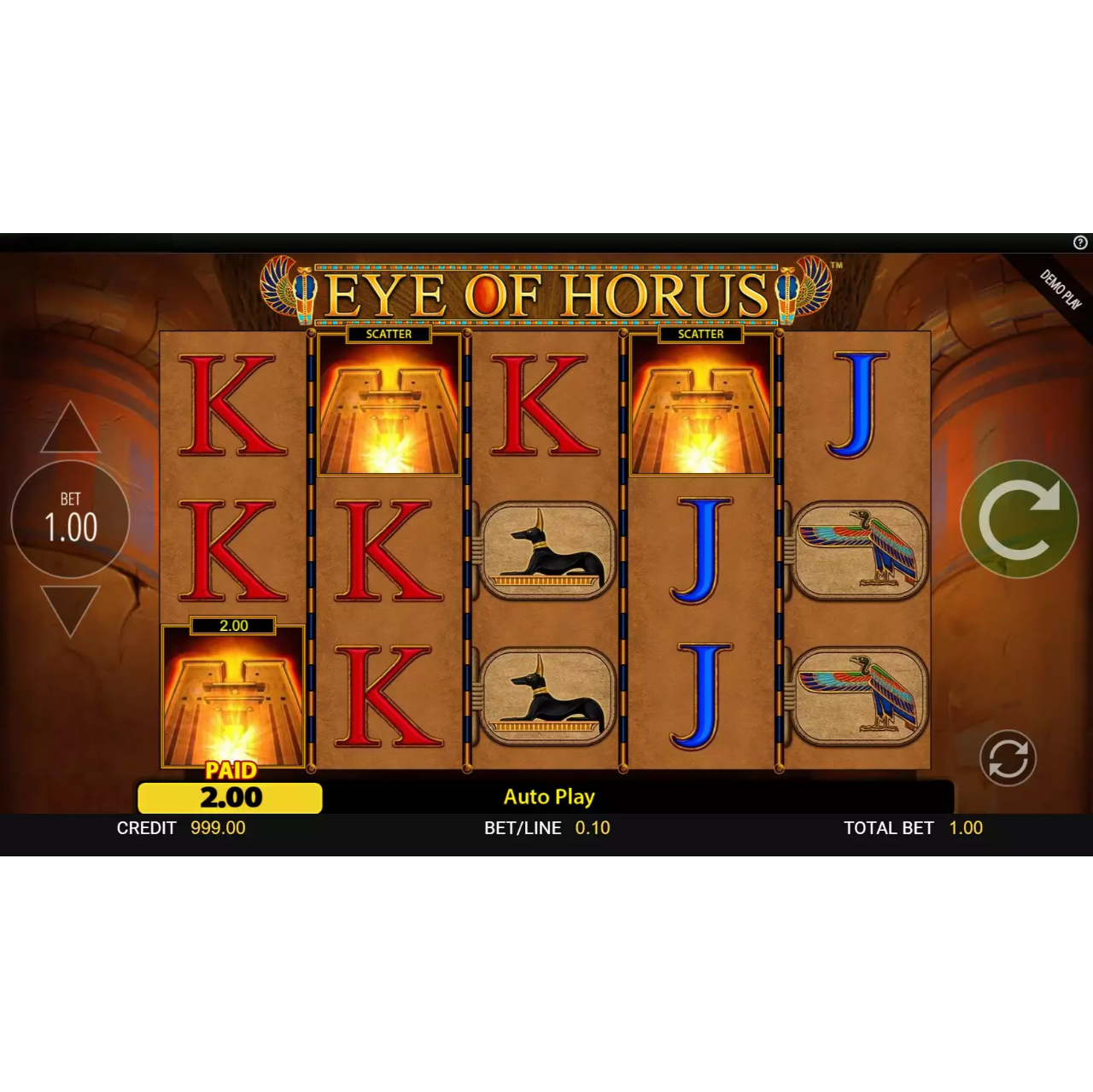
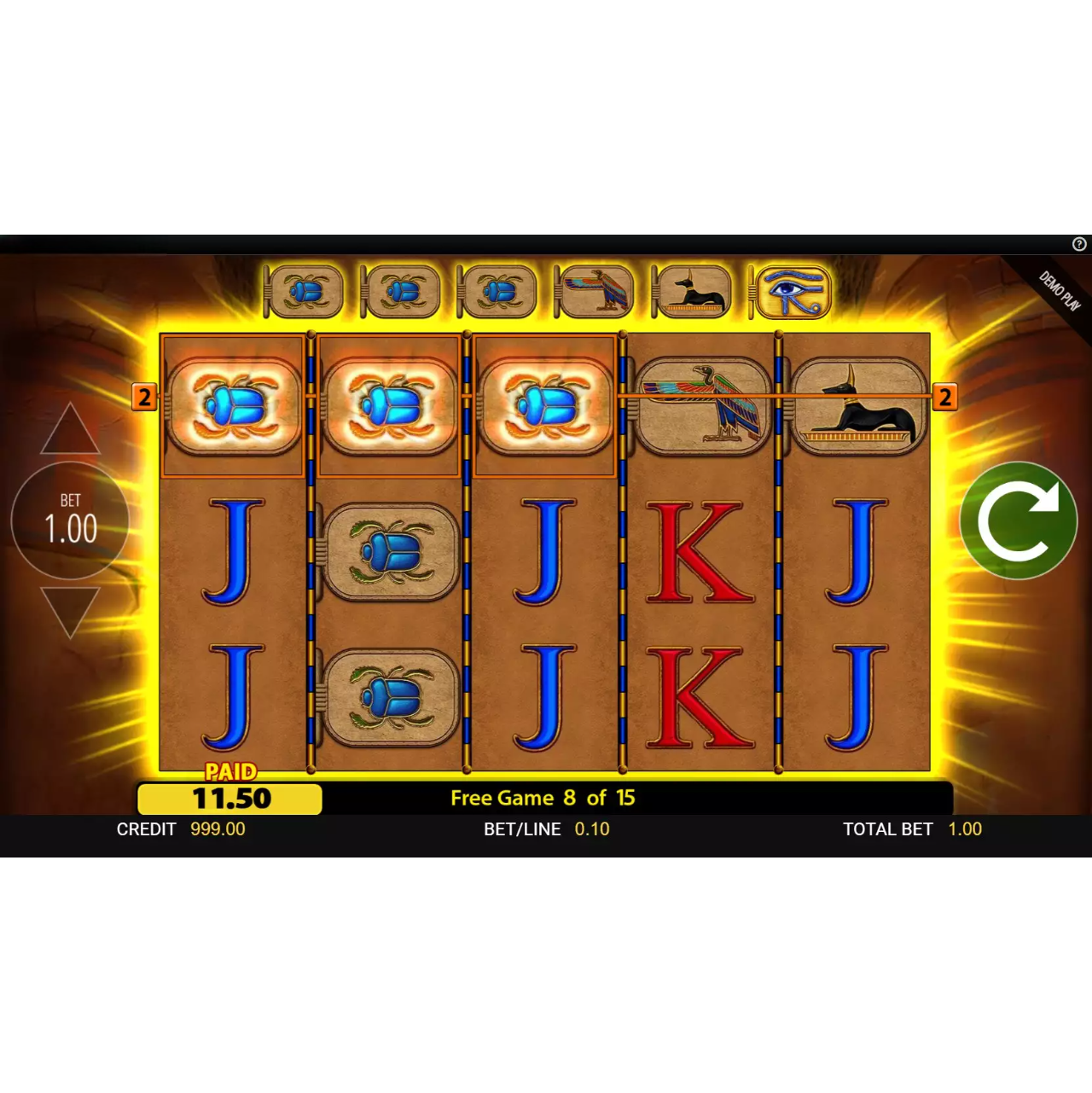
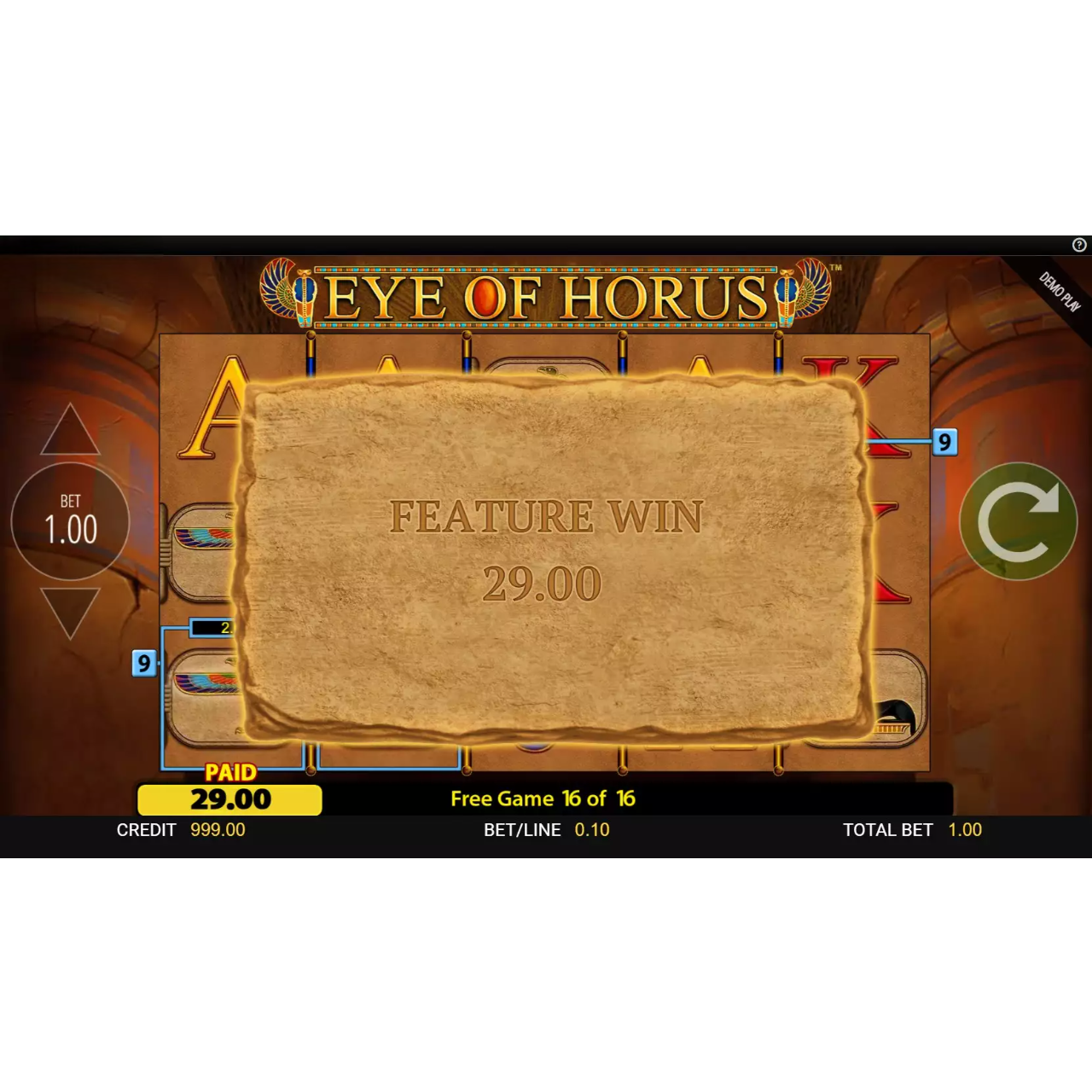
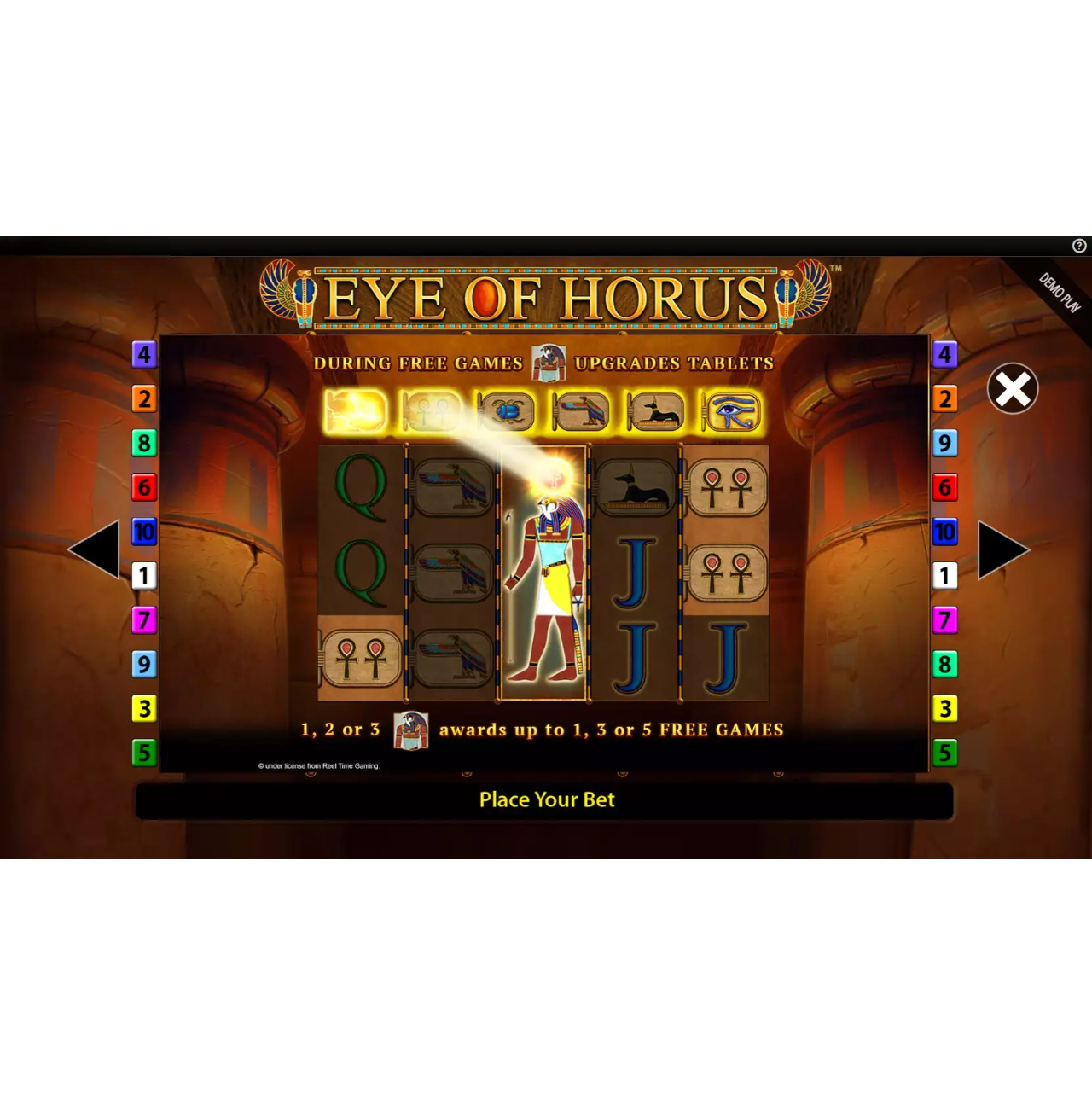
The Scatter symbol is the gateway to the Free Spins feature. When three or more Scatters land anywhere on the reels, the Free Spins round is triggered. During Free Spins, symbol values increase through progressive upgrades, which significantly improves win potential compared to the base game. Understanding this core Feature is essential, as Free Spins are where most of the slot’s higher payouts are generated.
How Free Spins actually work
Free Spins in Eye of Horus are not instant win events. Instead of guaranteed big payouts, the feature focuses on gradual symbol enhancement. Each retrigger upgrades symbol values further, creating a cumulative effect. This mechanic encourages longer feature rounds and patience, rather than short, explosive bonus moments. Players who expect immediate results may find the feature slow, while disciplined players often appreciate its long-term potential.
Why Eye of Horus isn’t about fast wins
From a mechanical perspective, Eye of Horus avoids aggressive win patterns. Fixed paylines, medium volatility, and progressive Free Spins all work together to prevent extreme variance. The slot is designed for controlled sessions where balance management matters more than chasing quick jackpots. Wins tend to build slowly, making the game better suited for players who prefer rhythm and structure over high-risk bursts.
Mechanics built for consistency
All major mechanics in Eye of Horus serve one purpose: consistency. There are no random multipliers, no surprise features, and no bonus buys. Every win is tied directly to visible symbols and known rules. This transparency makes the slot easy to analyse and reinforces why Eye of Horus appeals to players who value clarity, patience, and long-term play rather than fast, unpredictable outcomes.
| Mechanic / Feature | How it works | What it means for players |
|---|---|---|
| Wild | Substitutes for regular symbols on paylines | Helps complete wins, supports steady payouts |
| Scatter | Triggers Free Spins when 3+ appear anywhere | Main entry to bonus gameplay |
| Free Spins | Progressive symbol upgrades during the feature | Win potential grows gradually |
| Paylines | Fixed lines, always active | Predictable structure, no line management |
| Volatility | Medium volatility profile | Balanced sessions, fewer extreme swings |
| Win pattern | Gradual payout distribution | Not designed for fast or explosive wins |
Symbols & payout logic
Main and premium symbols
Eye of Horus uses a classic symbol structure that clearly separates standard and premium Symbol types. Low-value symbols are represented by traditional card icons and mainly serve to maintain game flow and small, frequent payouts. Premium symbols are Egyptian-themed icons, with Eye of Horus being the highest-paying symbol in the game. These premium symbols are less frequent but form the foundation of meaningful wins.
How the payout logic works
All payouts in Eye of Horus follow a fixed payline system. Winning combinations must land from left to right, starting on the first reel. The payout value depends on two factors only: the type of symbol and the number of matching symbols on an active line. There are no hidden multipliers or random modifiers in the base game, which makes the payout logic transparent and easy to understand.
Which symbols create big combinations
Larger wins are almost always formed by premium symbols, especially when four or five of them align on a payline. The Eye of Horus symbol delivers the highest payouts, while other premium icons offer solid mid-range wins. Low-value symbols rarely generate big combinations on their own and mainly support session stability. Because of this structure, meaningful payouts tend to appear less often but feel more significant when they occur.
Balance between symbols and expectations
The symbol distribution is designed to avoid constant high payouts. Premium symbols appear sparingly, reinforcing the slot’s medium volatility profile. This means players should not expect frequent large wins, but instead anticipate occasional strong combinations that balance longer periods of regular gameplay. Understanding symbol values helps set realistic expectations and explains why Eye of Horus rewards patience rather than aggressive chasing.
Game strategies for players
Strategy for low-stakes players
For low players, Eye of Horus works best with a conservative approach. Small, consistent bets allow you to stay in the game long enough to experience its natural rhythm. Because the slot uses fixed paylines and medium volatility, jumping between bet sizes usually creates unnecessary balance swings. A stable stake helps you absorb short losing streaks and makes Free Spins feel like an added bonus rather than a rescue mechanism.
Low-stakes play is less about chasing wins and more about session control. This approach aligns well with the core Game strategies, where patience and time in the game matter more than short-term results.
Strategy for mid-stakes players
Mid players should focus on balance efficiency rather than aggression. Increasing stakes slightly can improve payout size, but only if the bankroll comfortably supports longer sessions. Eye of Horus does not reward sudden bet jumps, as its win distribution is gradual. A better approach is to increase stakes only after stable periods or small recoveries, never during drawdowns.
Mid-stakes players benefit most from setting soft session goals instead of strict win targets. This keeps decision-making rational and avoids emotional chasing when results fluctuate.
Bankroll control and session planning
Effective bankroll management is essential in Eye of Horus. A common rule is to divide your balance into at least 100–150 base bets, which gives enough room for volatility to play out. If the balance drops below a pre-defined threshold, reducing stake size is usually smarter than pushing harder.
Tracking session length is just as important as tracking balance. Long sessions without clear direction often lead to mistakes, even in a structured slot like this one.
Knowing when to stop
Stopping at the right moment is part of the strategy. Eye of Horus rarely delivers instant turning points after long losing streaks. If you reach a planned loss limit or notice repetitive drawdowns without recovery, it’s usually better to pause. On the positive side, modest wins are often a good exit signal, as the slot doesn’t guarantee momentum-based continuation.
In short, Eye of Horus rewards players who know when to play, how much to risk, and when to stop. Discipline consistently outperforms impulse in this game.